
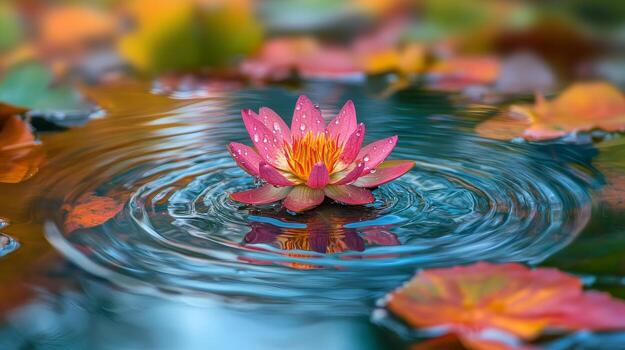
“You are undergoing birth and death in this very moment.”
~ Thich Nhat Hanh
The wheel recently turned from winter to spring. The days are getting longer, the weather is warmer (then cooler, then warmer, then cooler). My crocuses are up. Daffodils reach towards the sun on my walk to my car after work. In North Carolina, outdoor surfaces are tinted a green-yellow shade that vaguely resembles the snot it inspires.
Seasonal allergies are a mainstay here in the state’s piedmont, a region famous for our tree pollen. Claritin is a must. But of course, this inflammatory substance is required for our lush green springs. Pollen Season, as it is not so affectionately known, comes after the dark season, a season of early sunsets, cold air, and clouds. The darkness gets its own bad rap, but that too is not without purpose: it is in the dark that roots grow stronger, life goes latent in preparation for a beautiful reset. So it goes, the less desirable bringing the desirable.
One could also say, “No mud, no lotus.”
I celebrated the Spring Equinox at a beautiful yoga retreat in the Tennessee mountains. Our first morning practice was themed on this concept, the mud and the lotus. “No mud, no lotus” is a proverb referring to the beauty and wisdom that springs from difficult times and suffering. The lotus flower, a symbol of resilience and spiritual awakening, requires murky water and mud in order to grow and thrive.
Let’s talk about mud. Materially, it’s just wet dirt. It’s nutrient-dense and life-giving. There’s nothing inherently bad about it, and yet the connotations are overwhelmingly negative. Mud is the result of rain, of “bad weather.” Weather that appears to disrupt life, lest we become cold and wet. The resulting mud is murky. It sticks to our feet. We do not want it treaded into our homes. It is the opposite of clarity. It compromises our visibility. And to be real, it can be destructive.
It’s very easy to regurgitate this phrase, “No mud, no lotus,” when the mud is simply a nuisance you don’t want tracked into your home. Maybe it’s a difficult semester in college that leads to future accomplishments. Maybe it’s being laid off from a job leading to better prospects later on. Maybe it’s a challenging divorce. Life’s normal hardships that we can pretty easily take a mindful approach to.
What about when the mud is a force of significant destruction?
Nearly every one of my fellow retreat participants had to traverse a route between Asheville and the Tennessee border, a region that was literally devastated by mud just over one year ago. The region was crippled by rain, flooding, and mudslides that compromised I-40, the reconstruction of which is slow and ongoing. This was no mud to shrug off as a fun little life challenge that we can grow from. People were left without clean water and power for weeks. People lost their homes. People were traumatized. This mud literally took lives.
So it goes with the mud that is kidnapping people off the streets and holding them in camps without legal representation. The mud that’s putting poorly trained but over-armed agents into our airports to desensitize us to a police state. The mud that has my trans friends making escape plans in case things get worse. The mud that’s leveling whole cities in Gaza and Iran.
I chased this idea across the pages of my journal on the retreat. Wrestling with the inevitability of suffering while basking in the new season’s sunshine and backdropped by a picturesque mountain view, I wrote: “If there’s a lotus growing from all this mud, I’m not sure it will be worth it.”
It was heavy. So heavy that I broke myself out of my journal and back into the present moment. And there it was, the sunshine. The splendid mountains. The cool air on my skin, birds singing their songs despite – or perhaps in defiance of – the world’s limitless suffering. The laughter of retreat participants adjusting the jets of a hot tub. The connections being formed. The lingering smell of incense from our morning practice.
A lotus.
After all this writing about what mud is, the nature of mud, the dangers of mud, I forgot to consider the lotus. The lotus is not a reward, it is not a guarantee, and it’s not something that we “earn” just because we go through some muck. In fact, I have seen plenty of mud in my life but have never once seen a lotus growing in its natural habitat.
The lotus is a symbol of the Infinite. Ultimate consciousness, its blooms appearing to contain a thousand petals, its roots fully enshrined in mud, unseen. Its petals are superhydrophobic, meaning they repel the very water that gives them life. Water simply beads and drips off of them. The gift of the lotus isn’t a reward, it’s resilience.
I’d been thinking about the proverb all wrong, assuming “mud = bad, lotus = good.” Buddhists would call this an ignorant take, ascribing concepts of good and bad onto things that just are. “No mud, no lotus” does not ask us to see the beauty of the lotus as a reason to desire the mud. Rather, it asks us to accept the inevitability of both mud and lotus. Whether we see one as “bad” and one as “good” is irrelevant. We will get both. We have no choice.
The choice we do have is our choice to honor the Lotus. To acknowledge its origin as an inevitability and yes, enjoy the beauty that occasionally springs from suffering. Because the lotus is a symbol of the infinite, transformation, and wholeness.
My theme for April is Grow&Know. Let’s emerge from the mud beautiful and victorious, fully rooted in the inevitability of mud but also defiantly resilient against the coming rain.


 Five Breaths
Leave a comment